Mapfable

Puts your decisions, progress and next steps on a visual project map so you and your AI can continue a build without rereading long chats.

Visit Official Website

https://mapfable.app

Mapfable — visual project map tracking AI build decisions, progress and next steps
View full size

What It Does

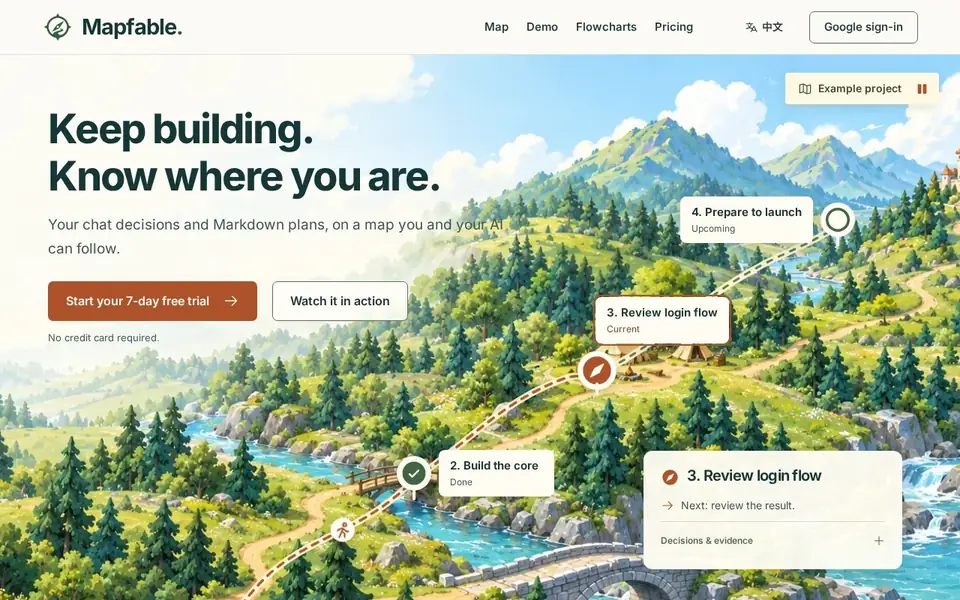
Mapfable addresses the drift that appears when a project is built across many AI conversations: the scope changed somewhere, something is marked done but was never reviewed, and the next step is buried in a thread. It keeps the plan as a map of nodes with explicit status, so define-scope, build-core, review-login-flow and prepare-to-launch read as one track instead of as chat history.

Each node carries the decision and the evidence with it. The example project on the homepage shows entries such as a recorded boundary (build the personal version first, teams can wait, stop after the login review), an evidence note listing checks to run (sign in, sign out, retry after cancellation), and links to the working files the plan grew out of, like project-notes.md and build-log.md. It also separates done from verified, asking whether something is finished or still awaiting review before launch.

The map is meant to be read by your AI as well as by you: the site describes connecting your agent to the saved context so a build continues from where the map stands, rather than from a re-paste of the previous conversation. The interactive example on the homepage is explicitly labeled so visitors know their own projects are not changed by trying it.

Access is through Google sign-in; flowcharts are listed as a separate mode and a Chinese version of the site is available. The homepage publishes two plans, $9 a month or $85 a year in US dollars, and states that once trials are available the first Google sign-in starts a 7-day trial with no card and no automatic charge.
Key Features

  • Visual project map with per-node status: done, current, upcoming
  • Decisions and boundaries stored with recorded evidence checks
  • Links to the working notes and logs the plan grew from
  • Connects your AI to the saved context so a build continues without rereading chats
  • Flowchart mode alongside the project map
  • Interactive example project on the homepage

Who It Is For

People building software with AI assistants who lose track of what was decided, what is actually finished and what comes next across long chat threads and Markdown notes.

Key Use Cases

  • Tracking a build across multiple AI sessions
  • recording scope decisions and boundaries with evidence
  • separating done from reviewed
  • giving an agent readable project context
  • planning launch steps

Pricing and Access

Pricing

Paid

Plans

PlanPriceBillingNotes
Monthly$9per month—
Yearly$85per year—

Plan details are shown as published; taxes and regional pricing may differ.

Access

Google sign-in. The homepage publishes two plans: Monthly $9 a month and Yearly $85 a year, in US dollars. It states that once trials are available, the first Google sign-in starts a 7-day trial with no card and no automatic charge.
Pricing and availability last checked: Nov 2, 2026 · Source: official website

Privacy and Data Handling

A privacy policy and terms of service are linked from the site. The homepage states the interactive example leaves your own projects unchanged.

Official privacy policy

Strengths and Limitations

Strengths

It targets the review gap that AI-assisted builds actually create, and stores the decision with its evidence instead of only the task.

Limitations

The 7-day trial is described as starting only once trials are available, so a reader may not be able to try it immediately; value depends on keeping the map updated as the build moves.

Why I Featured It

A project map for builds made with AI: decisions, status and next steps live on the map instead of in old chat threads. Useful for makers who lose track of what was decided and what is done.

This is an editorial choice, not an objective ranking or score. Read the issue.

Common Questions

What problem does it solve?

It puts a project's decisions, progress and next steps on one visual map, so you or an AI assistant can pick a build back up without rereading long chat threads.

What does it read?

The site points at the plain files a project already keeps — notes and build logs such as project-notes.md and build-log.md — and lays them out as a map.

How do you sign in, and is Chinese supported?

Sign-in goes through Google, and the site lists Chinese among its interface languages.

What does it cost?

The homepage publishes two plans: $9 a month or $85 a year, in US dollars. It also states that once trials are available, your first Google sign-in starts a 7-day trial with no card and no automatic charge.
Answers are editor-written from verified product details; last checked Nov 6, 2026.

Related Products

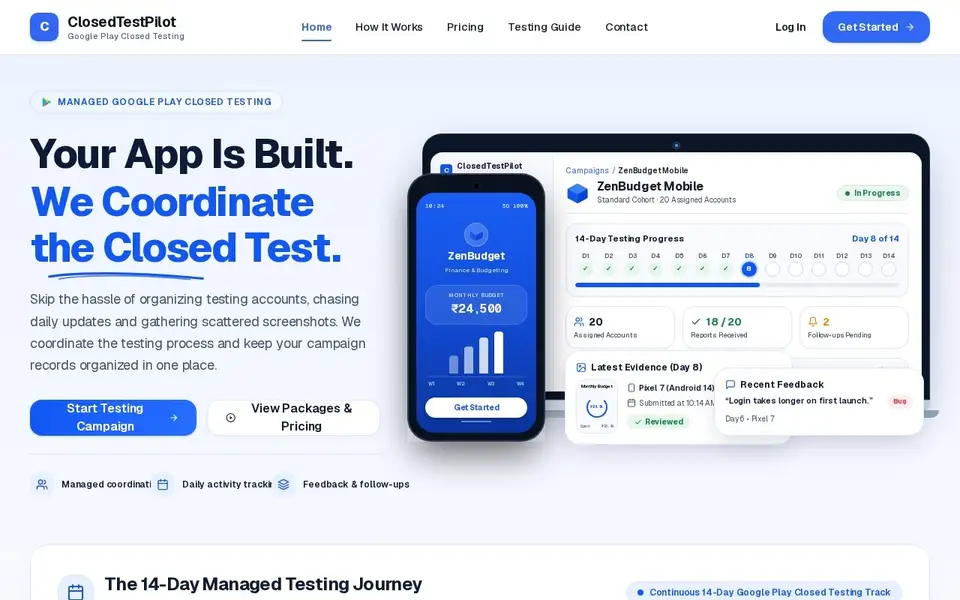
ClosedTestPilot — managed Google Play closed testing campaign dashboard

A managed Google Play closed-testing service with 14 continuous days of testing, screenshot evidence and structured feedback, from $29 one-time.

For Android indie developers, agencies and studios who must satisfy Google Play's closed-testing requirement before production access.

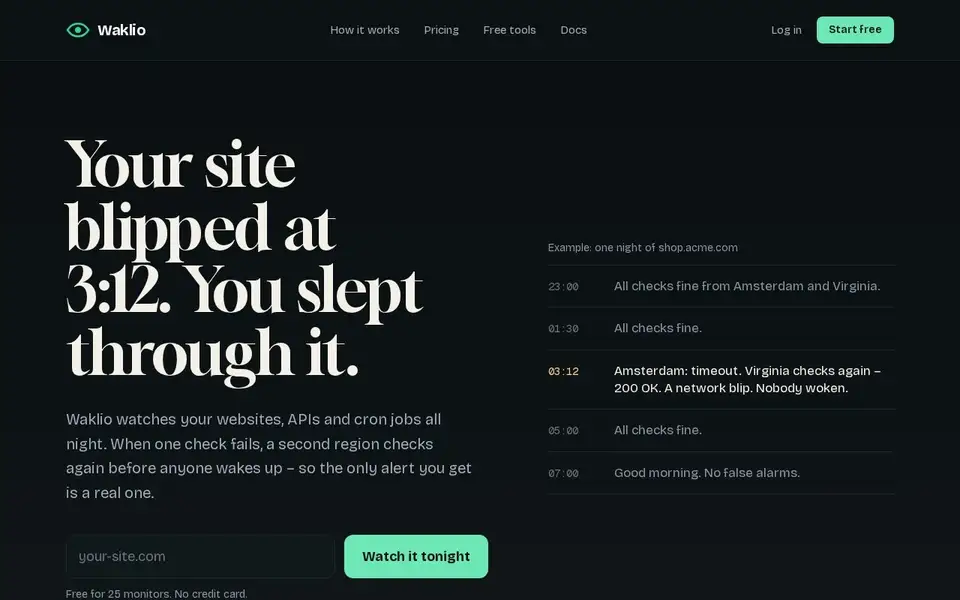
Waklio — uptime monitoring dashboard with two-region outage confirmation

Uptime monitoring that confirms failures from a second region before alerting: websites, APIs, cron, SSL and status pages. Free for 25 monitors.

For Solo founders, freelancers, SaaS teams and agencies that want uptime alerts only for real outages, not network blips.

claudeagents — 120+ agent kit for Claude Code with one-command install

A kit of 120+ coding, SEO and marketing agents for Claude Code, installed with one command and running locally. One-time purchase, lifetime updates.

For Developers, SEO specialists and marketers who use Claude Code and want ready-made agent prompt packs.

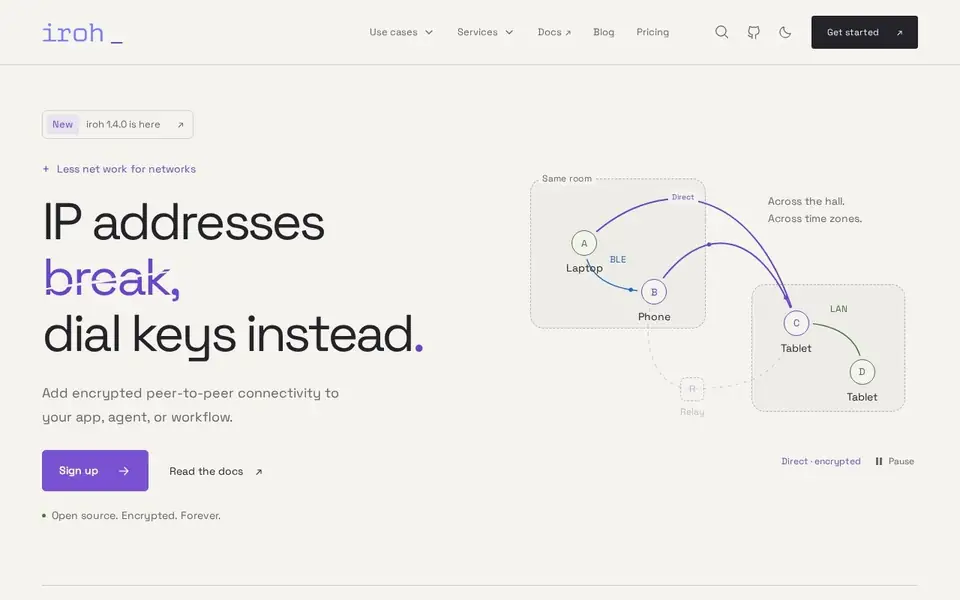
iroh — encrypted peer-to-peer networking by dial key with hosted relays

Adds encrypted peer-to-peer connectivity to an app, agent or device, dialing keys instead of IP addresses, with hosted relays from $0.

For Teams shipping apps, agents or devices that need direct encrypted connections without port forwarding, static IPs or a central server, from prototypes to production fleets.